
Making a Matriarch
Growing up with a mail order bride

I don’t remember where I first heard the phrase Mail Order Bride but the words tunneled straight into me. As a newly immigrated Filipina-American, the label scarred and became part of me. It planted shame in my mind, shaped my image of my family, and taught me to lie. The words were never spoken in my house or by my parents, and without real conversation with my parents, I had to travel back to the Philippines to deconstruct the meaning for myself.
In 1980, my mother was a 21-year-old student at Western Leyte College, living with her family in Lamanoc, a cluster of two-room, dirt-floor houses. Lamanoc is bordered by the Bay of Leyte, mangrove forests, and lush tropical forests. Even 40 years later, this village is not on Google Maps and does not have a post office.
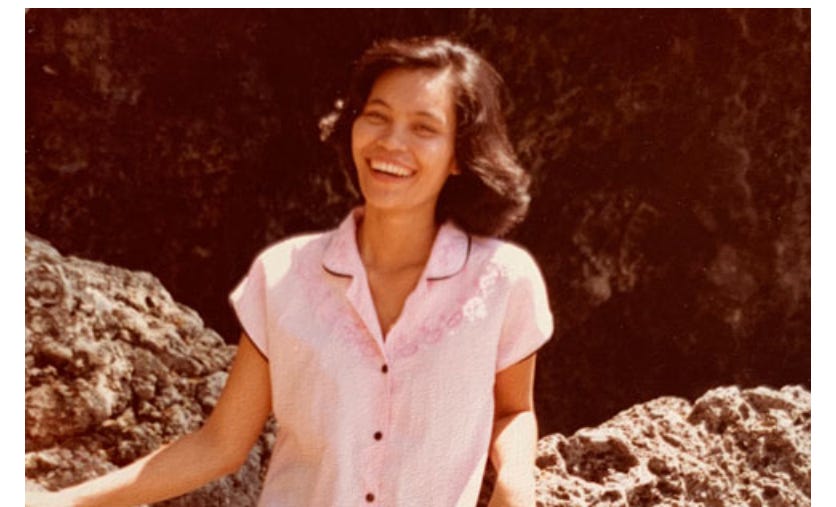
My grandfather had started a second, weekday family in the city where he worked as an engineer. Grandma Limosnero had been supporting all 13 of her kids by selling Lumpia on the side of the National Highway. When my mother’s friend suggested they submit their photos and biographies to an international marriage agency, my mom saw an opportunity to control her fate.
She received three letters, one from a man in Greece, another from Houston, and the last from my dad, a twice-divorced Marine living in Mountain View. She only ever wrote back to my dad. She believed that in California, she would encounter the least amount of racism, and he had looked handsome in the picture that he’d sent, standing in Levi's underneath an arch made entirely of deer antlers. In his second and subsequent letters, he sent a $20 bill, enough for rice for the week.
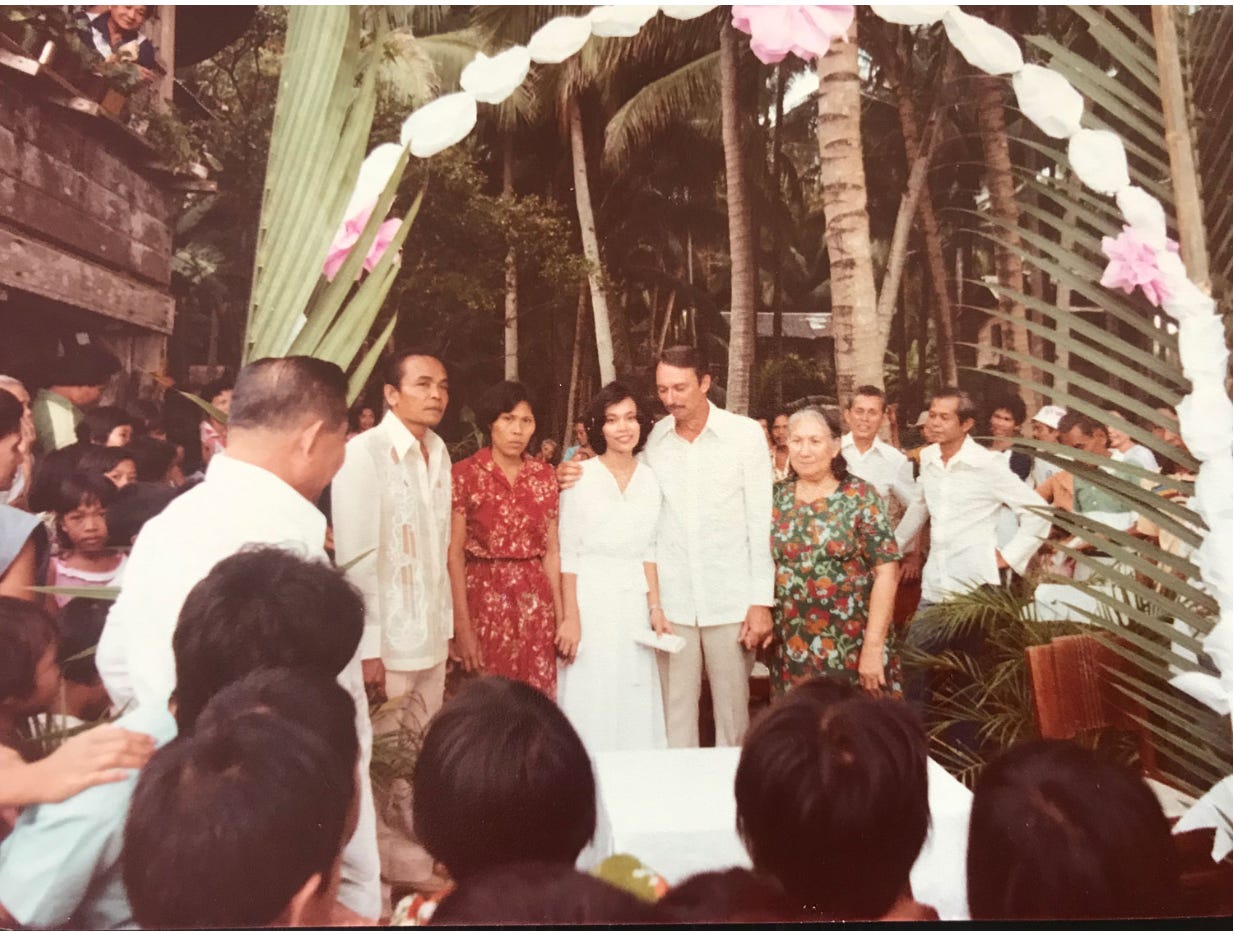
After a year of letters, my dad took the 2-day trip to Lamanoc from San Francisco. My parents were married that week. My sister came nine months later, my mom’s first and my dad’s fourth child.
It was my Grandma Limosnero who had insisted that the new couple stay in Lamanoc. At the time, immigrating to the U.S. as a bride was common, and horror stories swirled around about women being abused or killed by their foreign husbands.
Dad’s family liked to say that he could sell ice to an Eskimo, and I imagine his charm served him well during their honeymoon period. He didn’t even drink during his first week in Lamanoc. But by the time that we moved to the U.S., the Budweiser truck was making regular monthly stops at our wooden beach home. They parked the two-story truck right in front of the porch, blocking the sun and the beach view. This way, cases of tallboys could be unloaded right onto the porch and then assembly-lined into the kitchen at the back of the house. Fights between my parents became legendary. Our Aunties would hear them start up, and immediately shuffle my sister and me out of the house.
During the 11 years we lived in the Philippines, my father’s military pension was more than enough for our family of four. I grew up with my mom’s siblings living with us, nannying, cooking, and cleaning in exchange for university tuition. Though dad was an authority figure in Lamanoc, both teaching English formally and informally doling out advice, he never learned Visayan and strictly enforced an English-only house. My Aunties and Uncles made sure that we ate fried fish and rice, with Spanish hot chocolate for breakfast. We’d eat with our hands, hurriedly picking up forks, and switching to halted English if we heard my dad walk to the kitchen from his roost on the porch.
On December 18th, 1991, my 8th birthday, we moved into my paternal grandmother’s home in Mendocino County, California. My mother had been living in the U.S., going to college for a year, and caring for ‘the kids’ fell to my dad and my Grandma.
Grandma Carolyn was a retired accounting professor, and she had the thinnest, whitest skin I had ever seen. She showed us stacks of HungryMan frozen dinners, saying, “I was never going to cook again.” That first night, she taught me how to make a scotch and water, and cooked chicken liver with onions for dinner.
Growing up on a rural Philippine island, there were no other families like ours. If I heard the word “Americana” yelled from across the street, I was bolstered knowing they were meant for me or my sister. When we moved to the U.S., I learned that there were many other families like mine. I learned that there were other women like my mom, and that these women were from third-world countries, and that they used men like my dad. The stereotype grated against everything I knew about my mom and my family, but I was also a kid and still learning to be an American. If Mail Order Bride was what women like my mom were called, who was I to say different?
In the U.S., I also learned that people could date, that they should fall in love, and then get married. In the Philippines, people had just been married. I started learning other people's love stories, and eventually decided on and practiced one that fit my family. I started to tell people that my dad was a Vietnam Veteran, that he was stationed in the Philippines, and that is where he had met my mom. I remember an adult on the receiving end of this lie cocking her head and saying “Now, how old is your dad?” None of these lies made sense: my mom was 16 years old at the end of the Vietnam War.
The summer before high school, after 6 years in the U.S., we booked a vacation home in Lamanoc. Our old two-story house had been partitioned with plywood to make more bedrooms. My aunts inspected my mother’s luggage, picking out which clothes they wanted to keep. After leaving for the day, my clothes had also been rummaged through. My uncles drunkenly asked why Dad didn’t come, then giggled and said they were relieved.
Our trip was for my Auntie Gretchen’s wedding, my sister and I were bridesmaids, and my mother was the official host. The ceremony was in the Lamanoc Catholic Church, a low, windowless, cement brick building, and the reception was at my childhood home. But when the wedding party was seated for dinner with the Priest, my mother was left standing. In all the 11 years she lived in Lamanoc as a married woman, my mom was excluded from Communion, a weekly right for practicing Catholics. There again, she was snubbed because of her marriage to a divorcee. The insult was so public and visceral that even the memory makes my stomach churn. During this visit, I saw that none of my aunties or village girls had chosen to follow my mom’s path into international marriage, and I wonder if witnessing my parent’s marriage affected their decisions.
Later that week, I found myself on stage for the Ms. Lamanoc Pageant. My mom, Ms. Lamanoc 1979, had surprised me with my participation. I can remember her face clearly, as she stood off stage, radiating happiness and pride. In my mind, my presence on stage was inconsequential, my simple rayon dress as flimsy as the paper-flower decorations next to the five actual Ms. Lamanoc contenders in their sequinned gowns.
A familiar shame flooded my body, and heated, pulsing blood rushed to my skin. This night was another humiliation to endure, another chance for the world to put us in our place. But when I looked at my mom, standing there in her hometown, she was lit with joy.
I thought about the 21-year-old girl she had been, about the choices that she made, and about what she has since accomplished. In 8 years in the U.S., she earned an AA, a BA, and was working towards an MSW. She financially supported our entire family, helped her brothers and sisters buy houses and farms, she sent my cousins to private schools and universities. She petitioned her sister and mother to immigrate to the U.S., and helped them establish themselves. That day, I glimpsed what would take me years to grasp: that she had always been more than the phrase Mail Order Bride.
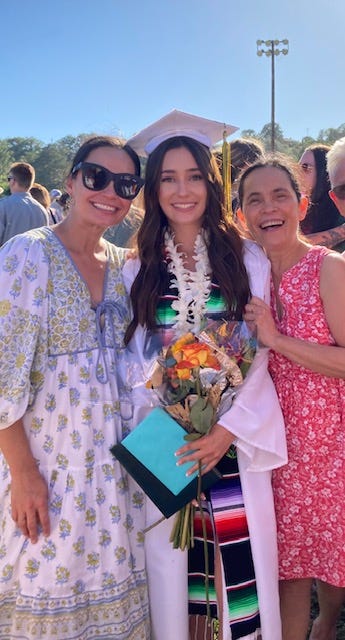
Wow, what a mom, what a story! Happy MD dear BB Carolyn.